Berlin, early Friday morning, 10 November 1989
The Sounds of Freedom
How Western radio, rock and roll and popular culture helped bring down Soviet Communism.
- BBC World Service
- Voice of America
- Radio Free Europe
- Radio Liberty
- Radio in the American Sector
- Deutsche Welle
- Armed Forces Network Berlin
- Vatican Radio
- BBC World Service
- Voice of America
- Radio Free Europe
- Radio Liberty
- Radio in the American Sector
- Deutsche Welle
- Armed Forces Network Berlin
- Vatican Radio
Five interwoven threads
How the Cold War ended has a soundtrack. This series argues it was a cause.
It fell when four forces arrived at the same moment: a state that could no longer pay for itself, a border that could no longer block information, a generation that had already imagined another life, and a population that stopped being afraid all at once.
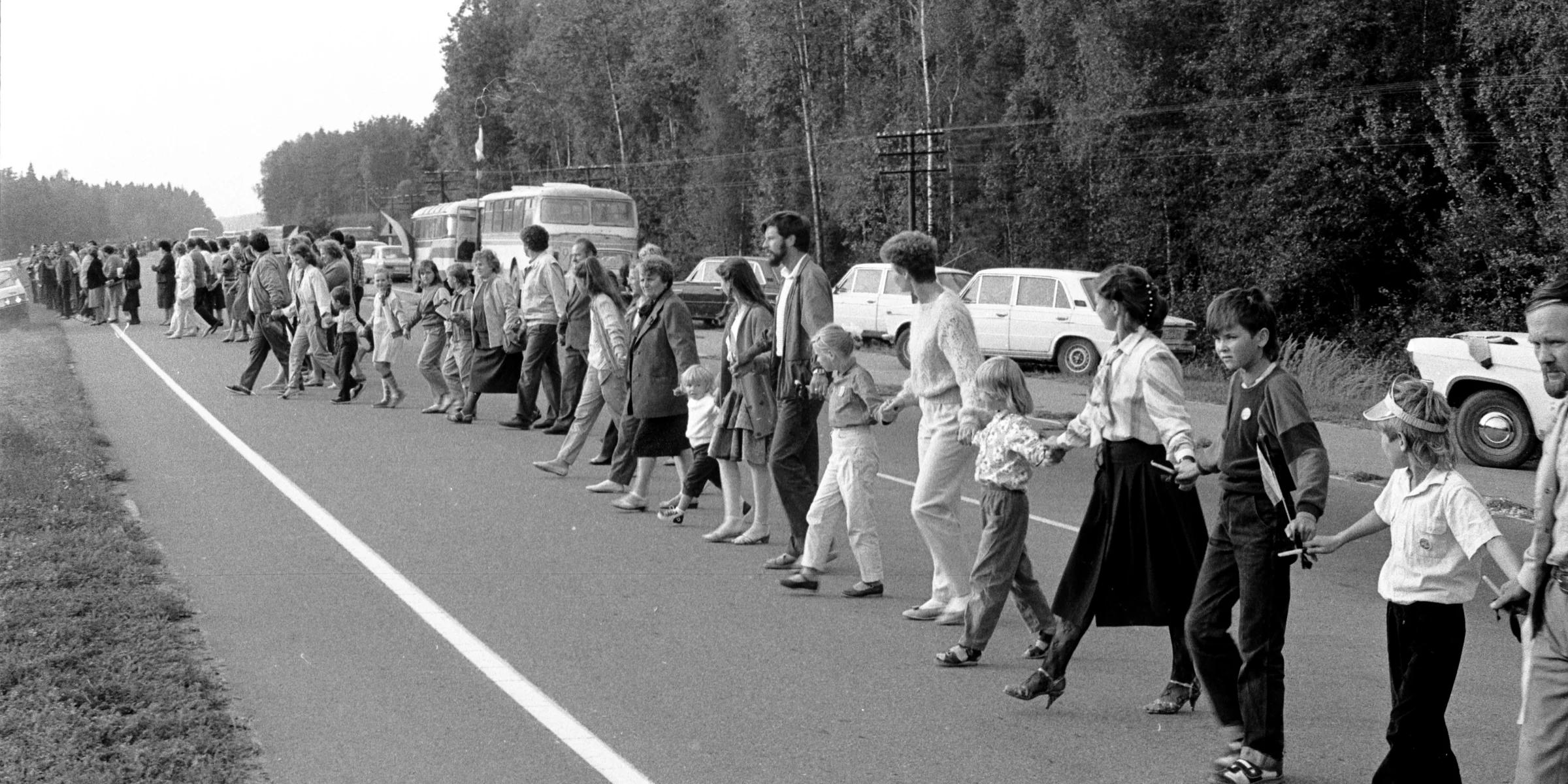
Two million people. Six hundred and seventy-five kilometres. No weapons.
They held hands across three countries, on the fiftieth anniversary of the pact that had handed the Baltics to Moscow. Four months later Lithuania was moving toward independence.
The Baltic Way, Moletai region, Lithuania, 23 August 1989 Saulius Gruodis, Lithuanian State Central Archives CC BY 4.0
The series
- 01
The Voices
Radio Free Europe and Radio Liberty, the Voice of America, the BBC World Service, Radio in the American Sector, Deutsche Welle and Vatican Radio. By the mid-1980s Western broadcasts reached roughly a quarter of the adult Soviet population in a given week, more than fifty million people. Not propaganda aimed at an enemy: news reaching citizens whose own governments had stopped supplying any.
- 02
The Culture
Records, cassettes, blue jeans, films, and the concerts that turned into confrontations: Queen before eighty thousand Hungarians in 1986, the Reichstag concerts of 1987 whose sound carried over the Wall. Western culture did not argue with Communism. It showed people a different way to live and let them draw their own conclusions.
- 03
Strategic Pressure
Reagan, Thatcher, John Paul II, and finally Gorbachev. NATO deployments, the Strategic Defense Initiative, collapsing oil revenues, and an economy that could no longer buy both bread and empire. Pressure created the opening. It did not fill it.
- 04
The People
Solidarity and its ten million members. Charter 77, which grew out of the trial of a rock band. Two million Balts joining hands across 675 kilometres. Seventy thousand people walking the Leipzig ring road past eight thousand armed men whose orders were never given.
- 05
The Shadow State
Running beneath all of it: the KGB, the Stasi, the Securitate. The antagonist of the series, and the reason its story has stakes. Every listener, every singer, every signature carried a price, and the people who paid it knew the number in advance.
The music battleground
A tape could be copied in a kitchen
Records reached the bloc in luggage and diplomatic bags, then multiplied outside anyone’s control. A press needs a factory. A cassette needs a second machine and an afternoon.
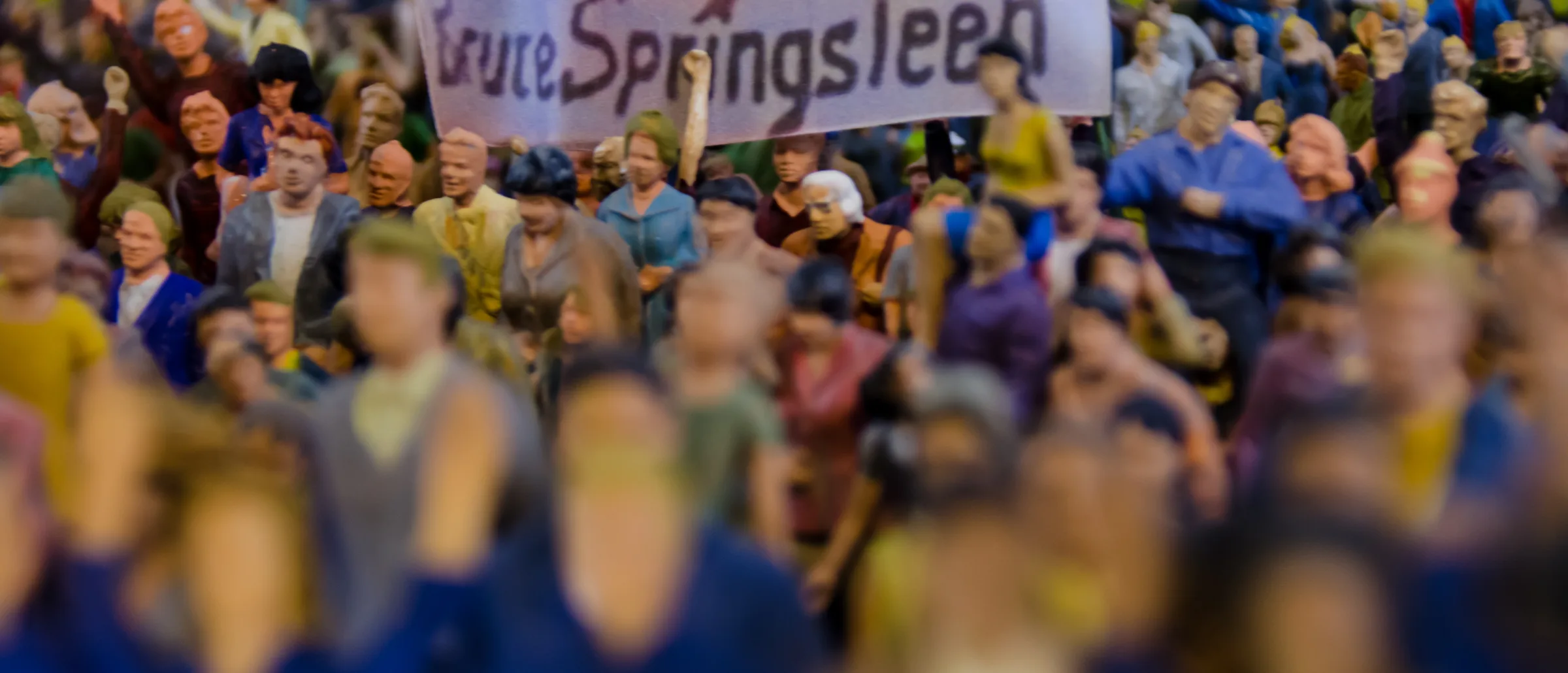
The state printed 160,000 tickets; more than 300,000 people stood in the mud. An hour in, Springsteen read out, in phonetic German, the hope that one day all barriers would be torn down. State television carried the concert live, and cut the sentence. Sixteen months later the Wall was open.
Bruce Springsteen, East Berlin, 19 July 1988 Ralf Steinberger CC BY 2.0
A partial listing
Live behind the Iron Curtain
Between January 1985 and December 1990, Western broadcasters transmitted roughly 700,000 hours of programming across the bloc. The concerts travelled with them.
- Queen, Budapest 1986
- Carlos Santana, East Berlin 1987
- Billy Joel, Moscow 1987
- Bob Dylan, East Berlin 1987
- Joe Cocker, East Berlin 1988
- Bruce Springsteen, East Berlin 1988
- Pink Floyd, Moscow 1989
- Bon Jovi, Moscow 1989
- The Rolling Stones, Prague 1989
- Queen, Budapest 1986
- Carlos Santana, East Berlin 1987
- Billy Joel, Moscow 1987
- Bob Dylan, East Berlin 1987
- Joe Cocker, East Berlin 1988
- Bruce Springsteen, East Berlin 1988
- Pink Floyd, Moscow 1989
- Bon Jovi, Moscow 1989
- The Rolling Stones, Prague 1989
The Shadow State
Standing against them was the apparatus built to keep entire populations inside: the KGB, the Stasi, the Securitate and the other Moscow-directed secret police services.
They are the antagonist of the series, and the reason its story has stakes.
- 91,000Full-time Stasi officers in 1989
- 190,000Informants on the books
- 111 kmOf files the Ministry left behind
- 3,000Soviet jamming transmitters at the peak, estimated
- $300mA year spent jamming Western radio, several times what Moscow spent broadcasting its own message
Stasi figures: Stasi Records Archive, German Federal Archives. Jamming figures: production estimates.
From a sealed continent to an open one
- Before
Before the Peaceful Revolution
The bloc as it stood in 1980: formidable, humourless, and quietly hollow.
- Music
The music battleground
How a cassette became contraband, and a concert became a security operation.
- Berlin
Berlin, the crucible
The divided city where the entire story fits inside four square miles, known throughout the world as ground zero of the Cold War.
- 1988
The convergence
The year the separate forces stopped running in parallel and began to collide.
- 1989
The revolutions
Six countries, six different endings: from a round table in Warsaw to a firing squad in Romania.
- After
Victory and legacy
25 December 1991, and the question the series leaves open: how much of that victory belonged to the broadcasters, the musicians, and the millions who imagined freedom before they could take it.
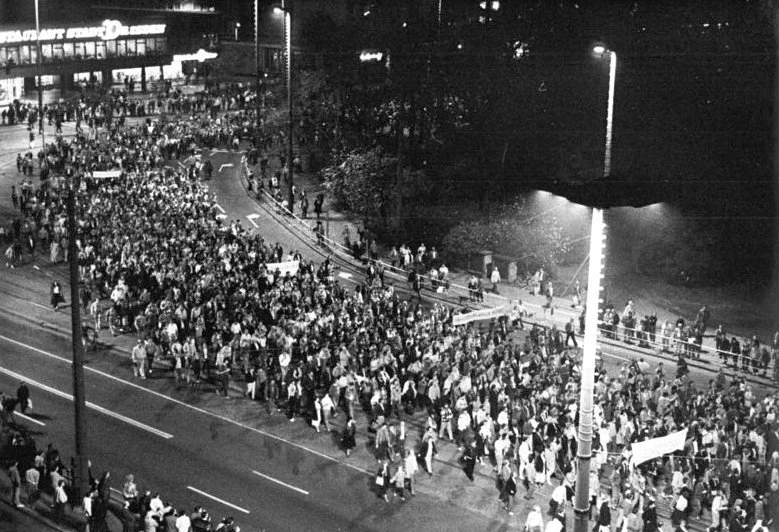
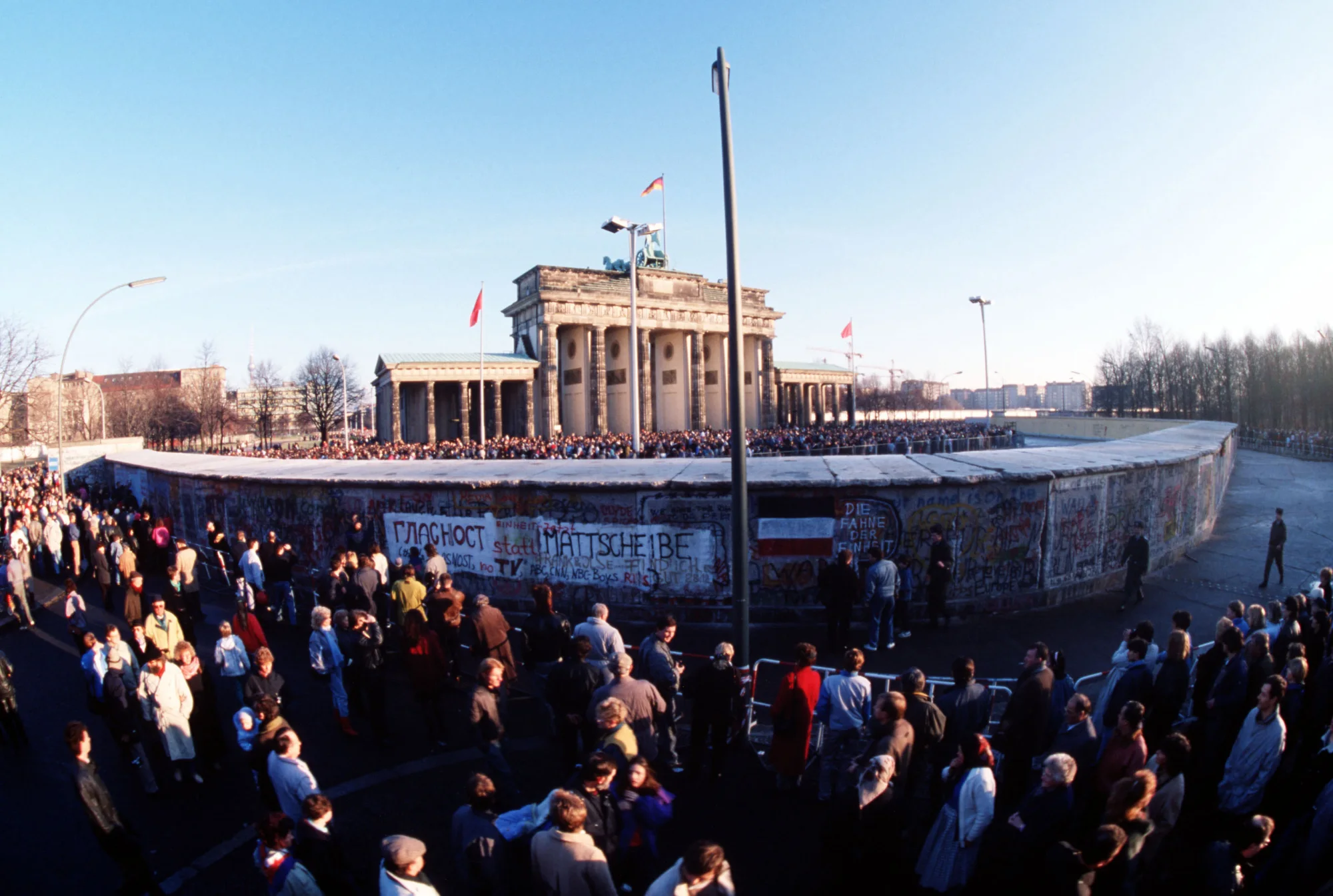
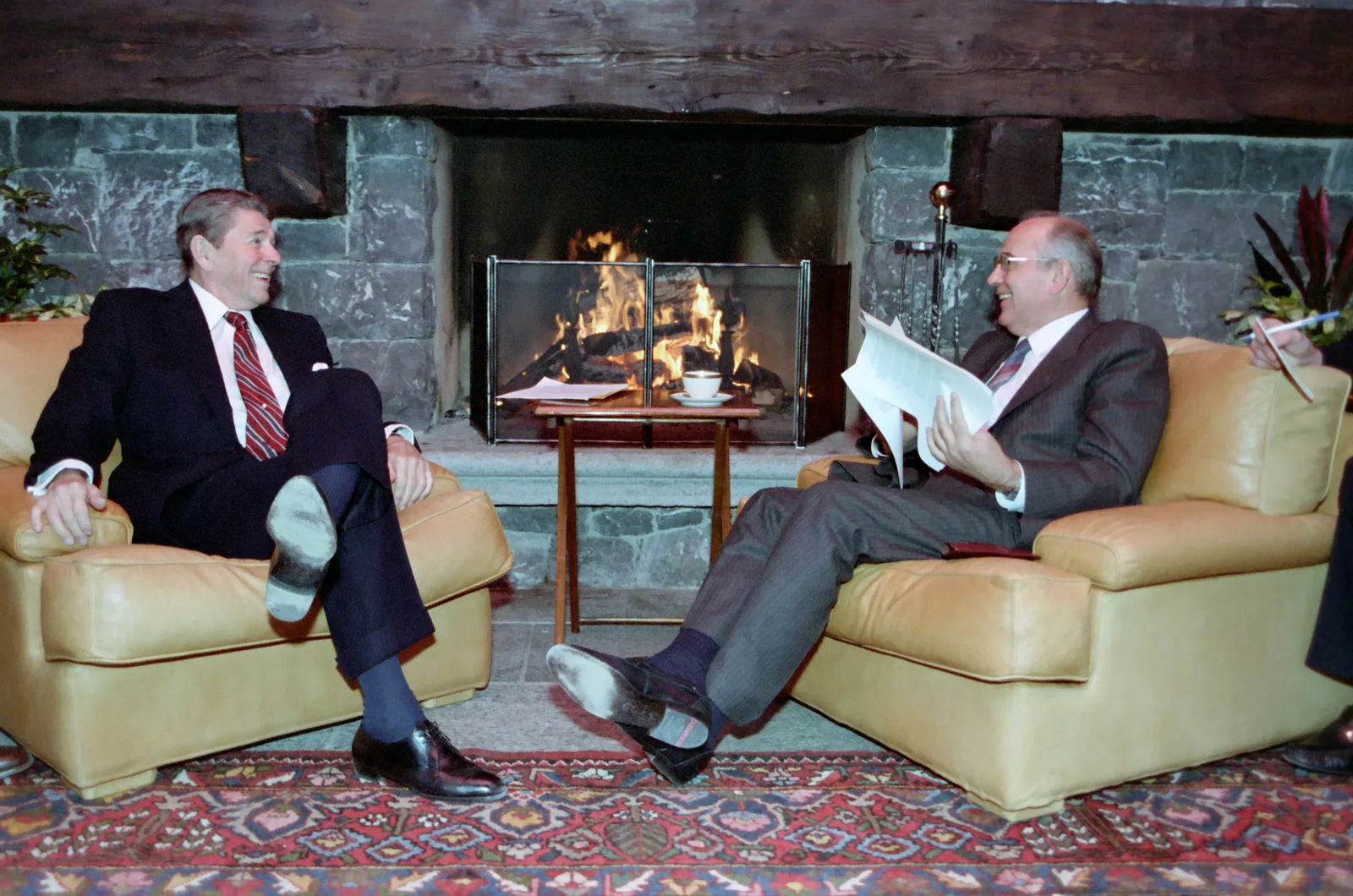
Photographs on this page are archival and are credited individually. All other imagery is original artwork and does not depict any historical event or person.
Were you listening?
If you tuned in past the jamming, copied a tape, or were watched for doing it, we want to record your account.
Someone who was twenty years old in 1989 is in their late fifties today. This testimony has a deadline that the production does not.
SendFor broadcasters and distributors
Development materials are available to broadcasters, distributors and co-production partners on request.
Request access